
새발블로그
C programming 본문
C
- assembly language
- operating systems of major languages
- language compilers
- assemblers
- computer network drivers
- databases
- language interpreters
- text editors
- print spoolers
- utilities
writing and running programs
- write text of program(source code)
- use compiler to convert program
3~N. errors and warnings// fix, re-compile
N. run it
C : fundamentals
- hardware independent
- porable to most computers
- case-sensitive ( int a; int A; are different)
-
- Editing -> Preprocessing or libraries -> compiling -> linking
C : Simple Variables
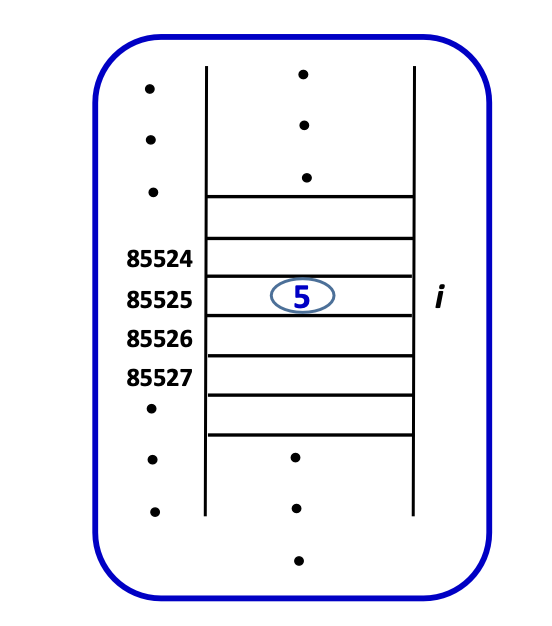
int i =5;
- integer value
- i with memory location
- store the value 5 at this location
int i=5
-> single value
Operator ‘&’
main( ) {
int i = 5 ;
printf ( "\nAddress of i = %u", &i ) ;
printf ( "\nValue of i = %d", i ) ;
}
==> 85525, 5
Operator ‘*’
main( )
{
int i = 5 ;
printf ( "\nAddress of i = %u", &i) ;
printf ( "\nValue of i = %d", i ) ;
printf ( "\nValue of of i = %u", *(&i)) ;
}
=> 85525, 5, 5
* : value at
& : address of
C : Pointer Variables
int *i =5;
address, containing the value
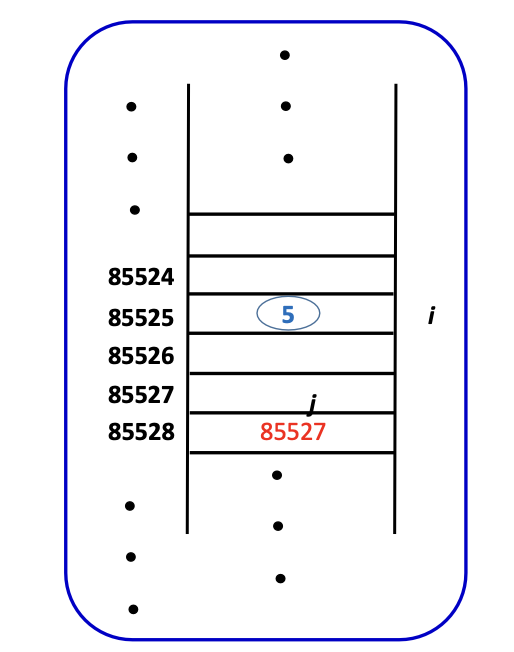
#include <stdio.h>
int main( ) {
int i = 5 ;
int *j ;
j = & i;
printf ( "\nAddress of i = %u", &i ) ;
printf ( "\nAddress of i = %u", j ) ;
printf ( "\nAddress of j = %u", &j ) ;
printf ( "\nValue of j = %u", j ) ;
printf ( "\nValue of i = %d", i ) ;
printf ( "\nValue of i = %d", *( &i ) ) ;
printf ( "\nValue of i = %d", *j ) ;

}
Address of i = 85525
Address of i = 85525
Address of j = 85527
Value of j = 85525
Value of i = 5
Value of i = 5
Value of i = 5
Pointers to a pointers
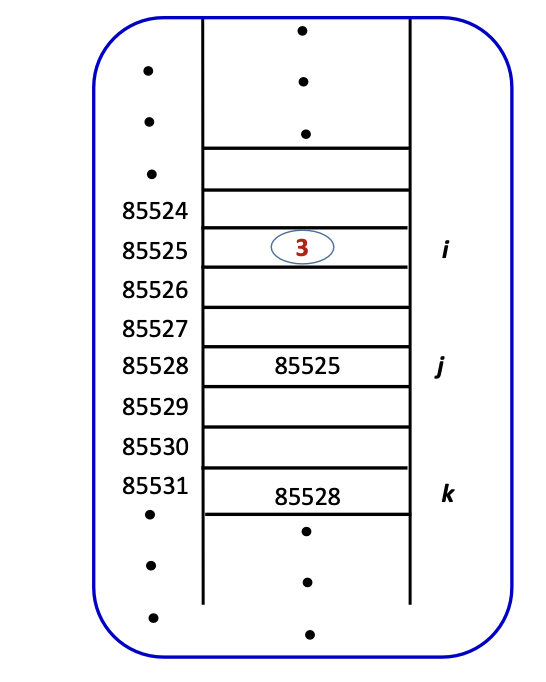
#include <stdio.h>
int main( ) {
int i = 3, *j, **k ;
j = &i ;
k = &j ;
printf ( "\nAddress of i = %u", *k ) ;
printf ( "\nAddress of j = %u", &j ) ;
printf ( "\nAddress of j = %u", k ) ;
printf ( "\nAddress of k = %u", &k ) ;
printf ( "\nValue of j = %u", j ) ;
printf ( "\nValue of k = %u", k ) ;
printf ( "\nValue of i = %d", i ) ;
printf ( "\nValue of i = %d", * ( &i ) ) ;
printf ( "\nValue of i = %d", *j ) ;
printf ( "\nValue of i = %d", **k ) ;
}
Address of i = 85525
Address of j = 85528
Address of j = 85528
Address of k = 85531
Value of j = 85525
Value of k = 85528
Value of i = 3
Value of i = 3
Value of i = 3
Value of i = 3
Pointer Arithmetic
- Addition of a number to a pointer.
int i=4; *j; *k;
j=&i; //i의 주소값이 j의 value가 됨
j=j+1;   //주소값이 가리키는 값에 증가 ex)i=값이 4, 주소값이 410이라면 j=411
j=j+9;   //마찬가지로 j=420
k=j+3; //k=423이 됨- Subtraction of a number from a pointer
int i = 4, *j, *k ;
j = &i ;
j=j-2;
j=j-5;
k = j - 6;
3.Subtraction of one pointer from another
main( ) {
int arr[ ] = { 10, 20, 30, 45, 67, 56, 74 } ; int *i, *j ;
i =&arr[1];
j = &arr[5];
printf ( "%d %d", j - i, *j - *i ) ;
}- Comparison of two pointer variables
main( ) {
int arr[ ] = { 10, 20, 36, 72, 45, 36 } ; int *j, *k ;
j = &arr [ 4 ] ; k = ( arr + 4 ) ;
if ( j == k )
printf ( "The two pointers point to the same location" ) ;
else
printf ( "The two pointers do not point to the same location" ) ;
}
Do not attempt following operations on pointers
• Addition of two pointers
• Multiplication of a pointer with a constant
• Division of a pointer with a constant
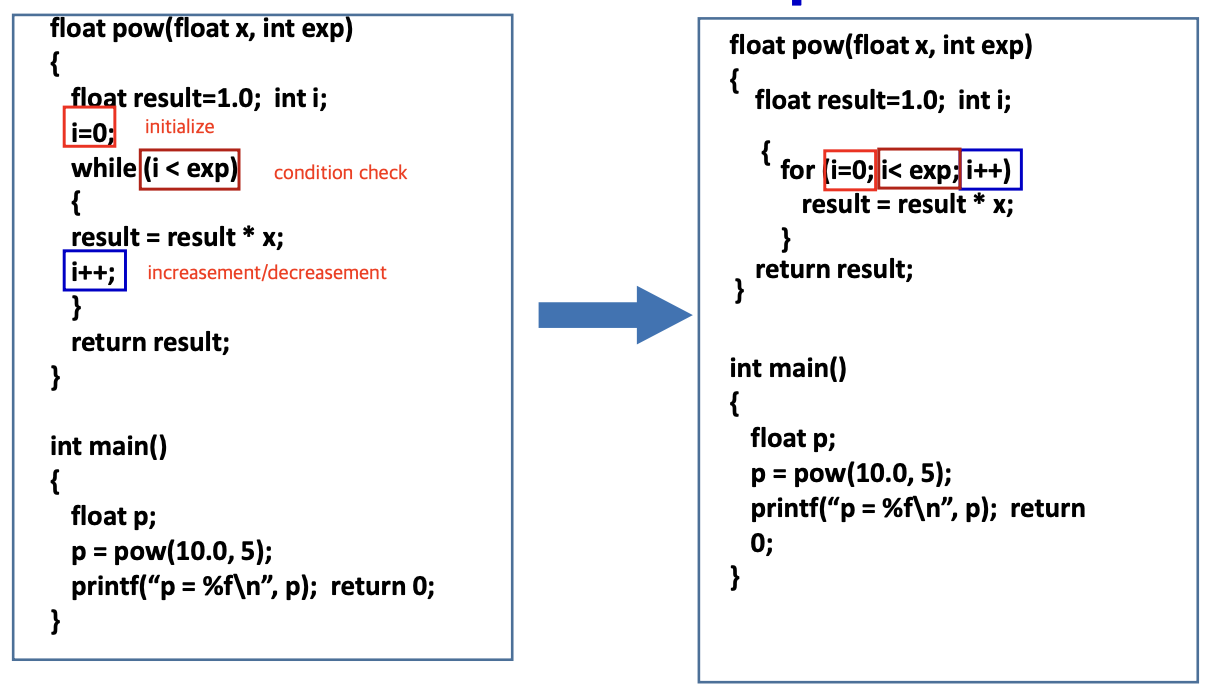
The "While" Loop //Repeart
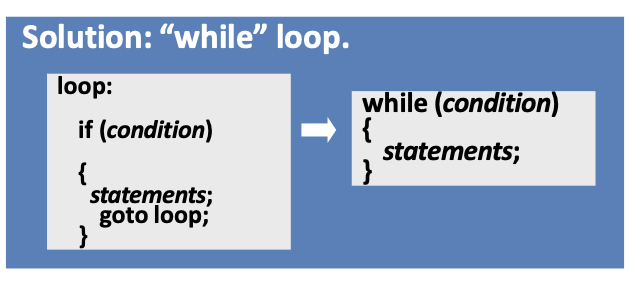
float pow(float x, int exp) {
int i=0;
float result=1.0; while (i < exp)
{
result = result * x; i++; }
return result; }
int main() {
float p;
p = pow(10.0, 5);
printf(“p = %f\n”, p); return 0;
}
The "for" Loop
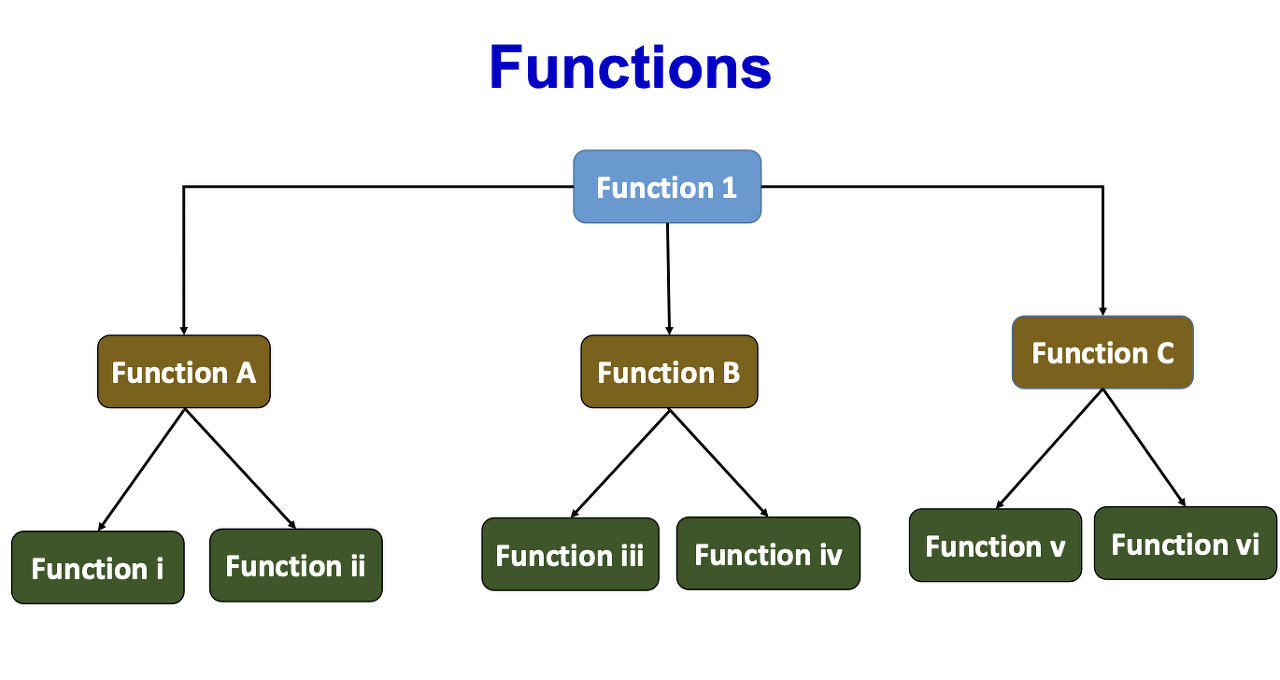
Functions and arrays
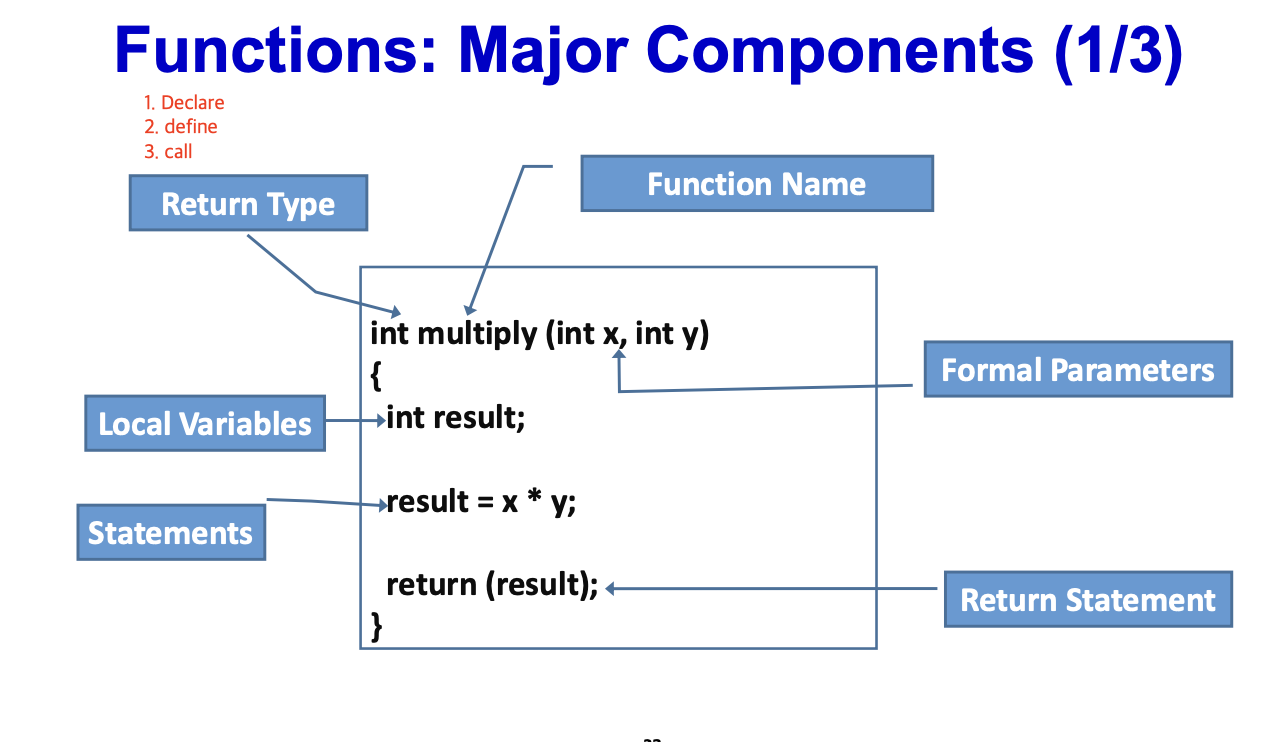
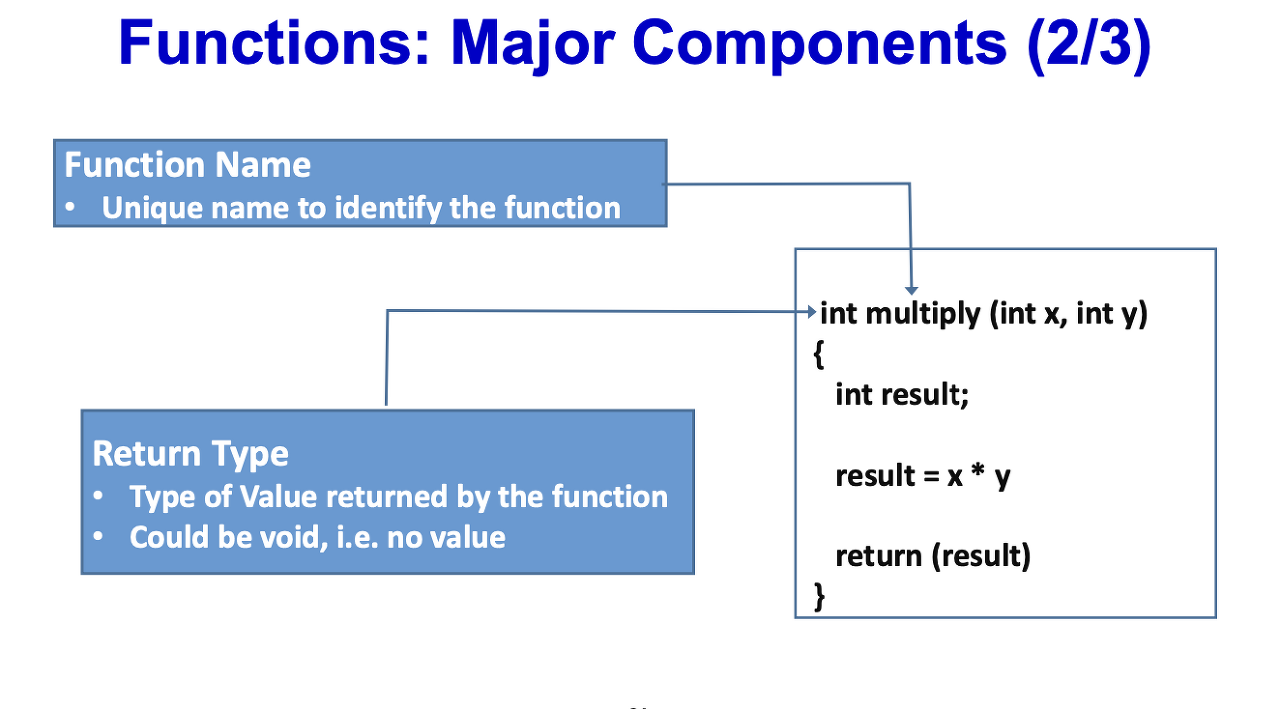

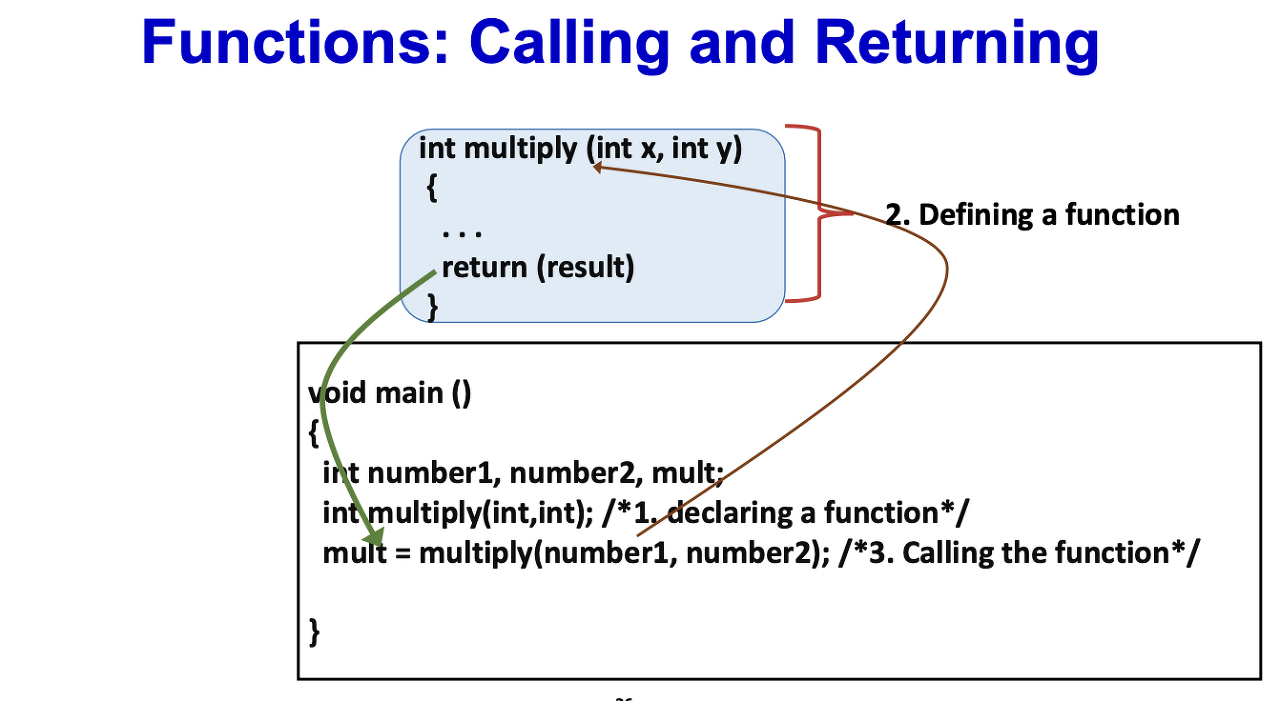
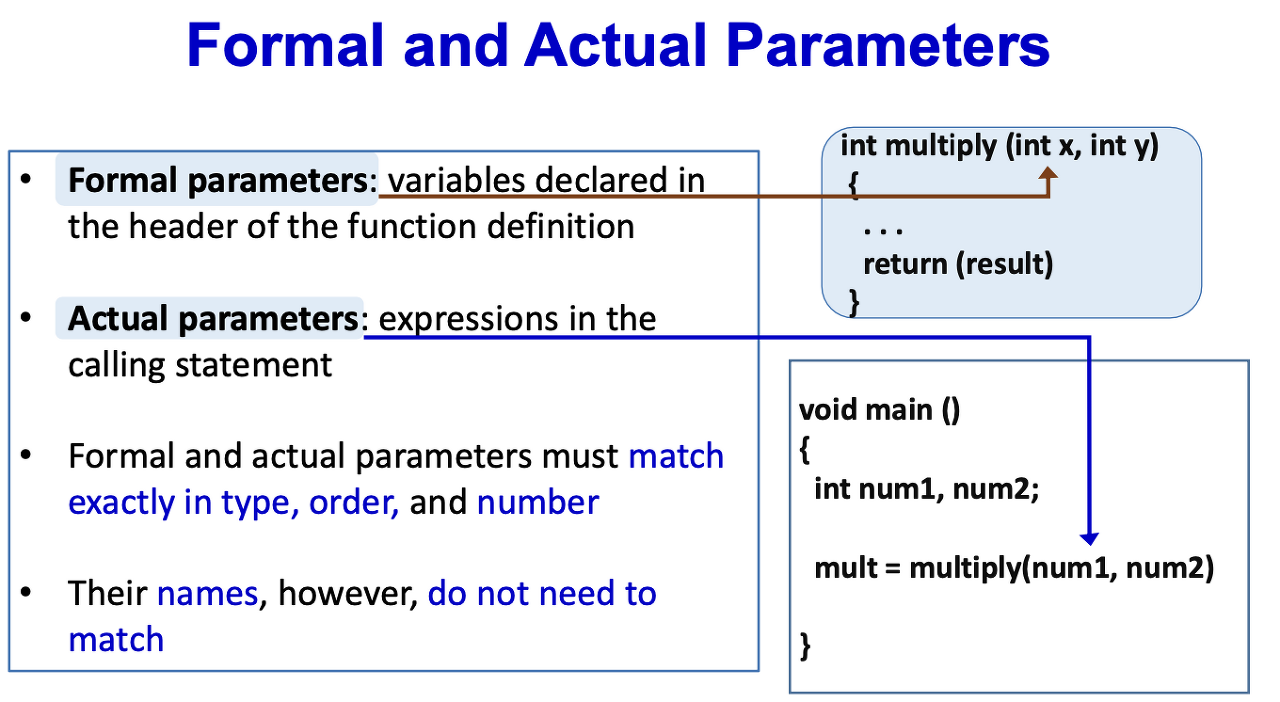
Functions: Parameter Passing
Value (of the arguments)
main( ) {
int p = 40, q =80;
swap ( p, q ) ;
printf ( "\np = %d q = %d", p, q ) ;
}
wap ( int x, int y ) {
int temp;
temp = x ;
x=y;
y = temp ;
printf ( "\nx = %d y = %d", x, y ) ; }Out put
x = 80 y = 40
p = 40 q = 80
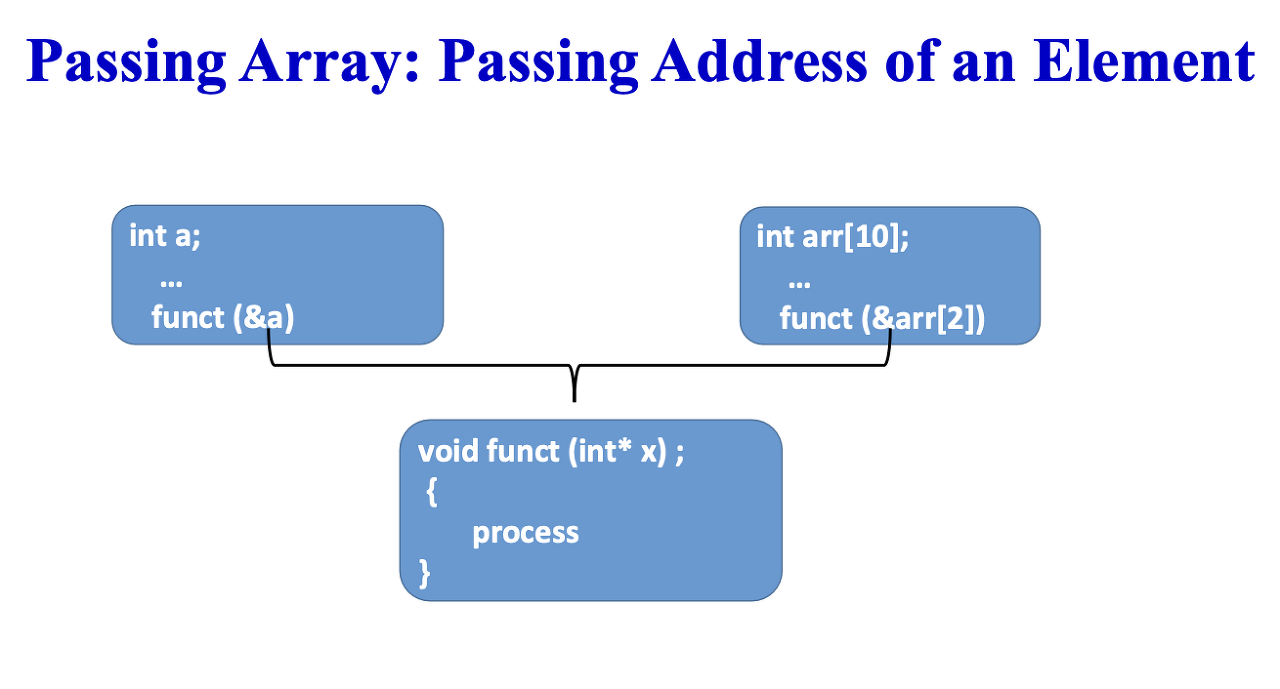
Reference (addresses of the arguments)
main( ) {
int p = 40, q =80;
swap ( &p, &q ) ;
printf ( "\np = %d q = %d", p, q ) ;
}
swap ( int *x, int *y ) {
int temp;
temp = *x;
*x = *y ;
*y = temp ;
printf ( "\nx = %d y = %d", x, y ) ; }Out put
x = 1830466124 y = 1830466120
x,y는 주소, 주소는 변하지 않음(왜? *x, *y로 할당된 값이 바뀐거지 주소는 그대로)
p = 80 q = 40
Arrays

- A collection of similar elements stored in consecutive memory locations
- An arrary is known as a 'supscripted variable;
- int Value[5];
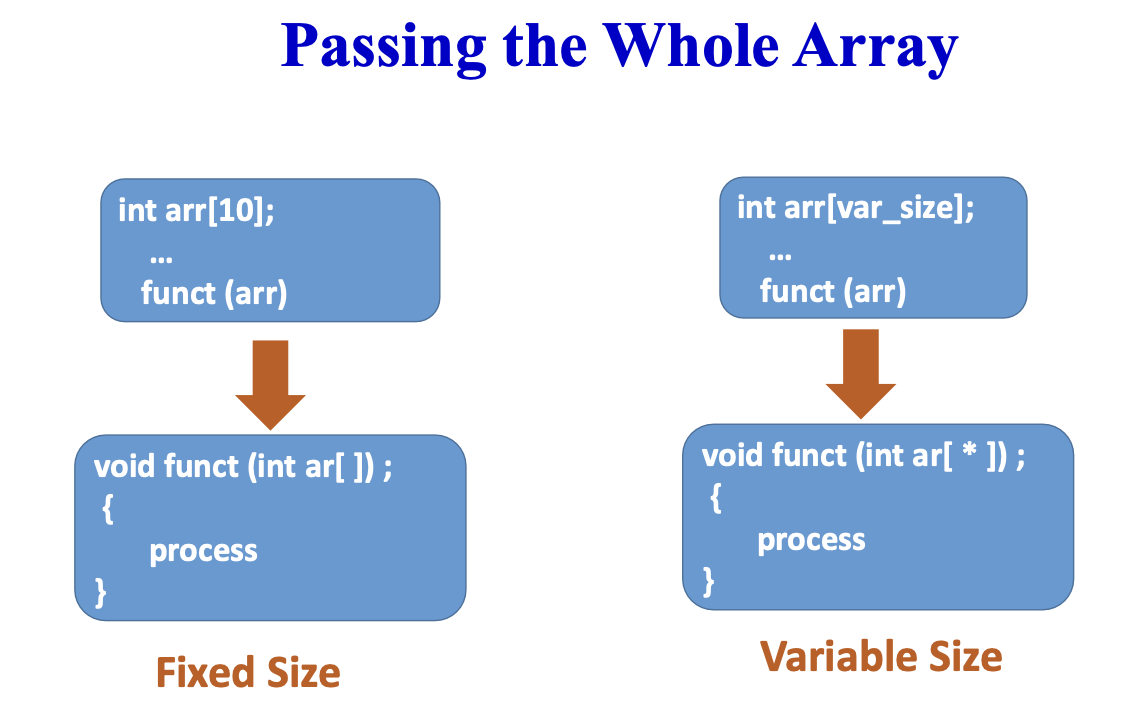
- Functions manipulating arrays-
- An arrary element can be passed as an argument/parameter to a function (as a primitive data type)
- An array can also be returned from a function
- An arrary of pointers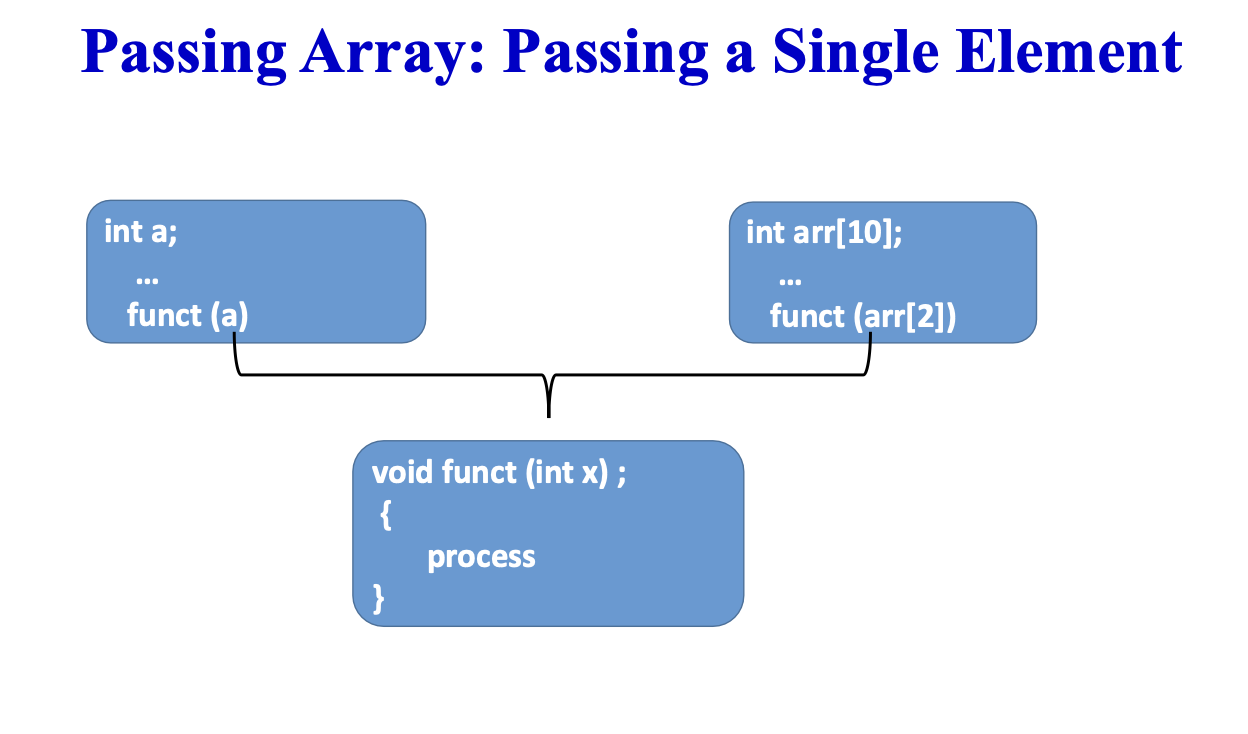
Structures
meaningful, related data to identify an entity
main() {
struct student{
int roll_no[15]; Char[] name; char *authors; double marks;
}
//declarations
struct student student1, student2; }
main() {
printf(“Student1 roll-number is %d”, student1.roll_no); printf(“Student1 marks is %f”, student1.marks);
}Arrary of Structures

'Computer Science > Data Structure' 카테고리의 다른 글
| Queue (0) | 2023.08.09 |
|---|---|
| Stacks (0) | 2023.08.09 |
| Complexity Analysis (0) | 2023.08.09 |
| C Basics (0) | 2023.08.09 |
| Data Structure Concepts (0) | 2023.08.09 |


