
새발블로그
Queue 본문
Queue
- Linear data structure
- First in first out(FIFO)
- rear: inserted at one end
- front: removed from the other end
Operations in an Queue
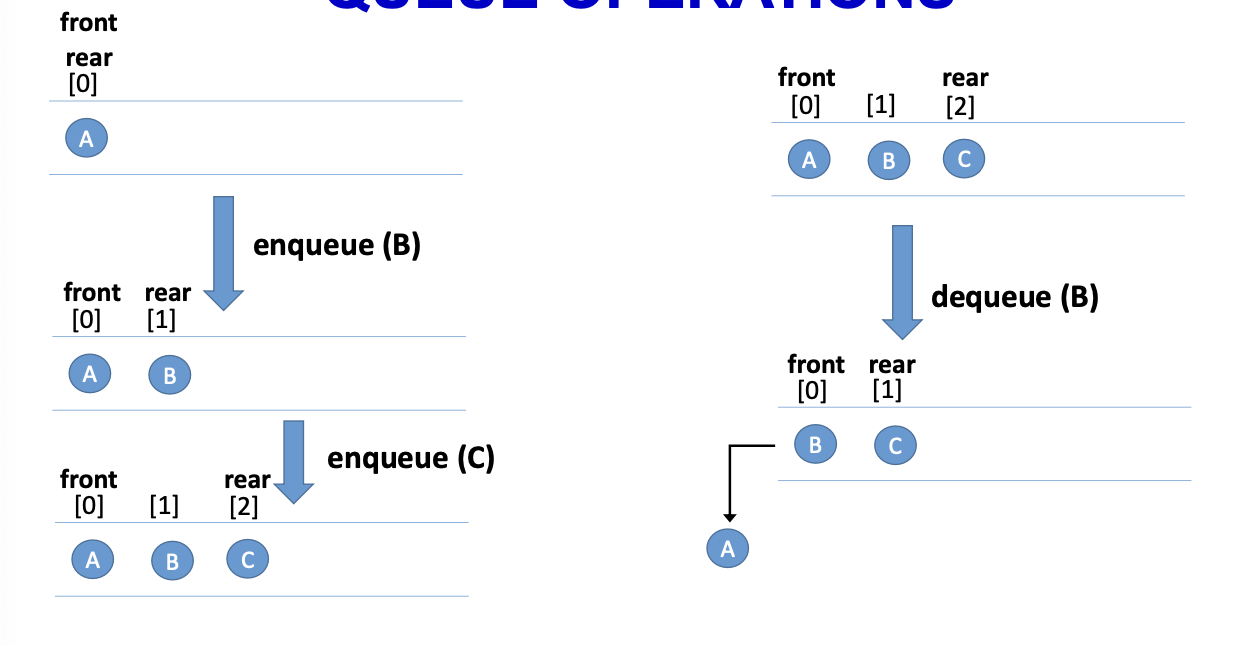
- En-Queue : add items on the *Rear end
- De-Queue : remove items from the front end

Applications of Queue
- checkout line, printer/keyboard/mouse queue, Airport take-off,
Operating system(Job scheduling, Multi-programming) - Different types of scheduling algorthms : Round Robin
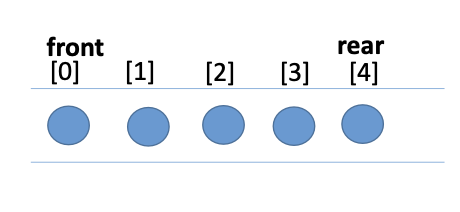
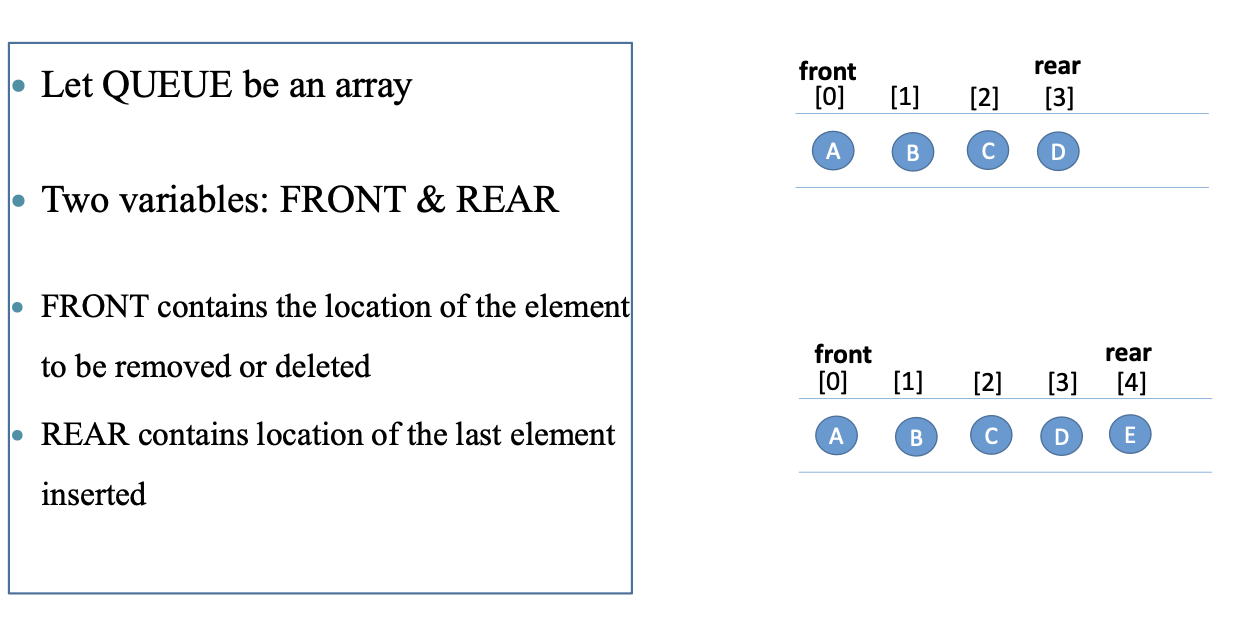
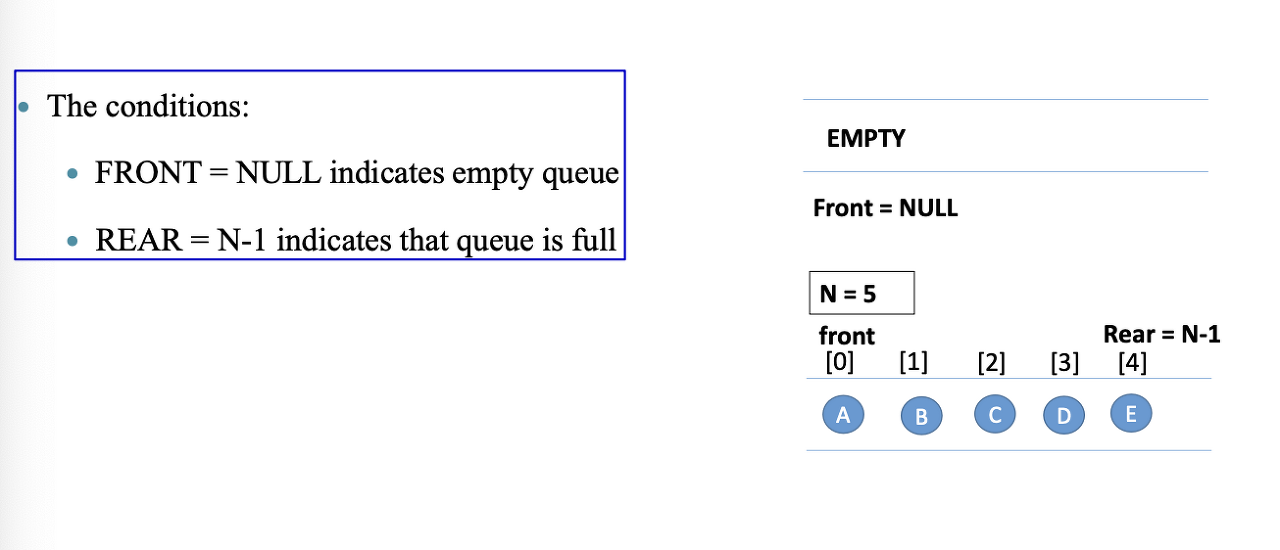
Using arrays (static implementation)
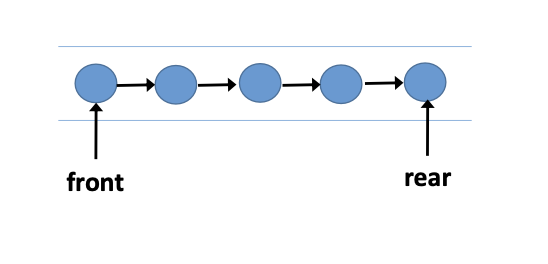
Using pointer (dynamic implementation)
Queue Operations
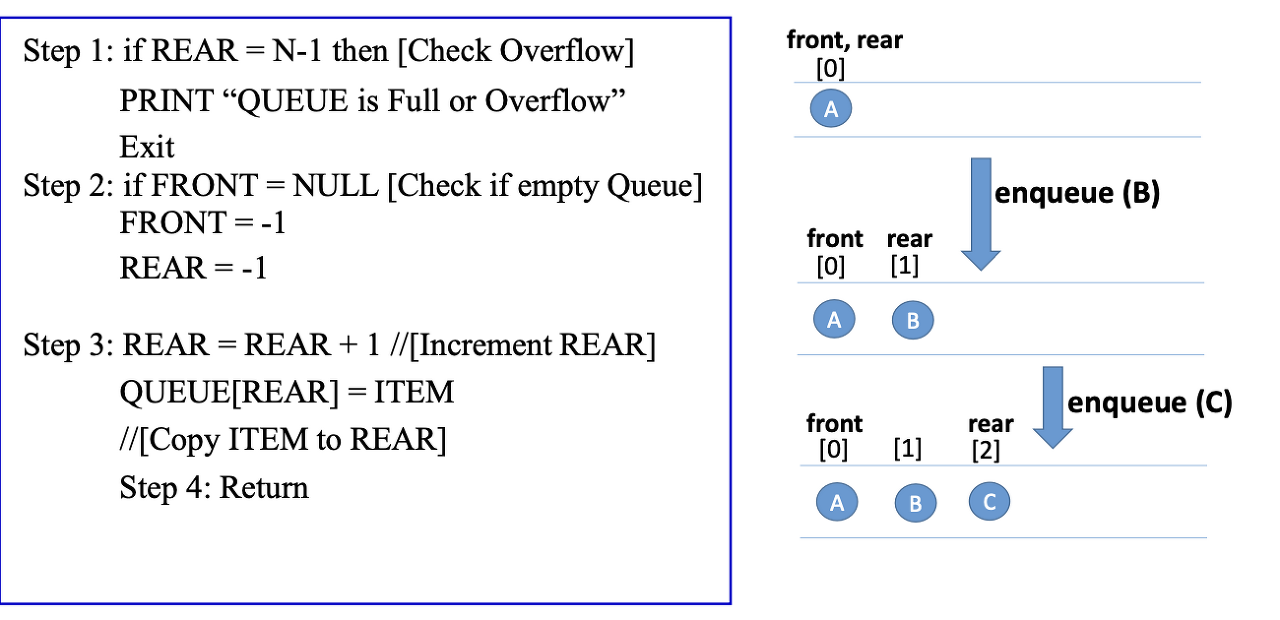
Algorithm : Enqueue
ENQUEUE (QUEUE, REAR, FRONT, ITEM)
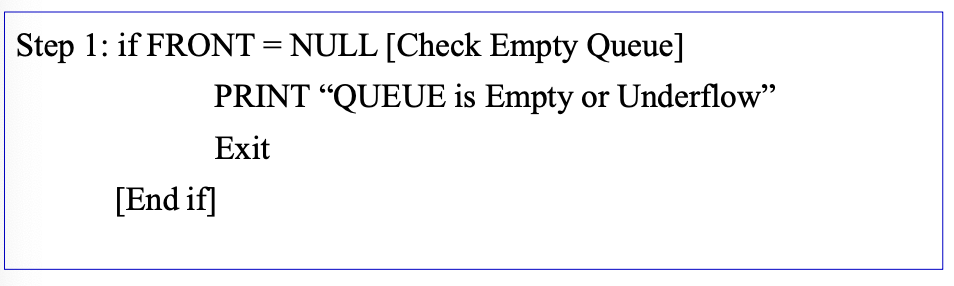
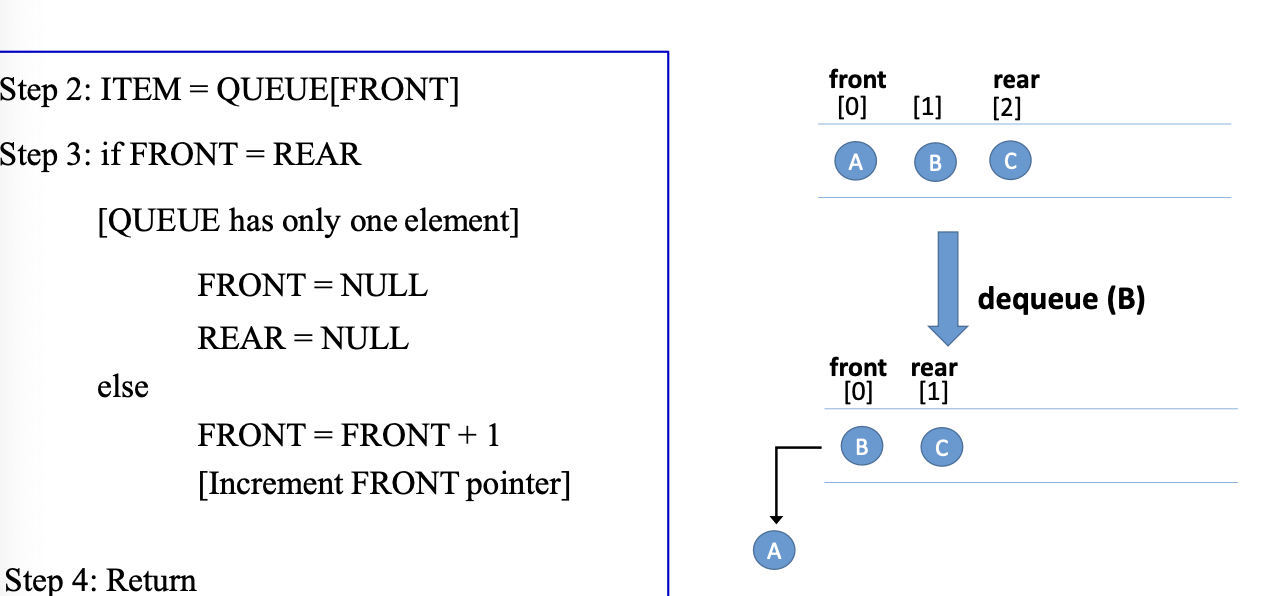
Algorithm : Dequeue
DEQUEUE (QUEUE, REAR, FRONT, ITEM)
pointer implementation of Queue
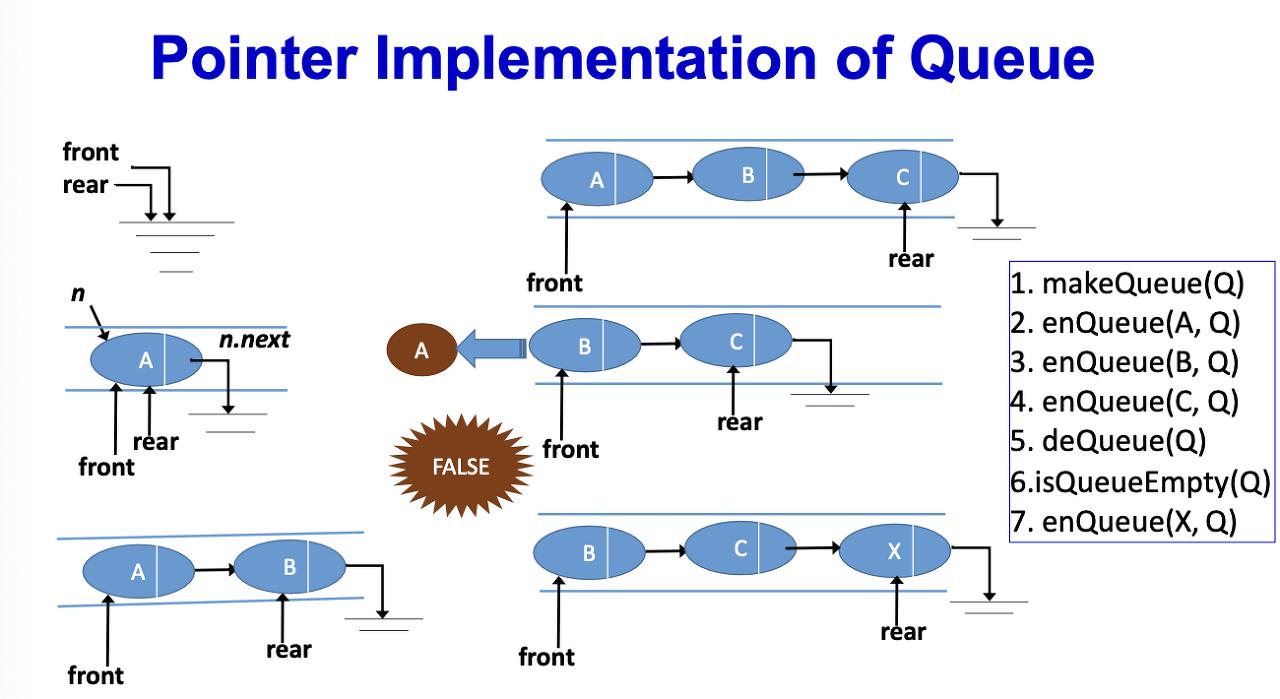
Recommended Functions
- Queue creates a new, empty queue
:parameters(x), returns(x) - enqueue(item) adds a new item to rear
:item(need), returns(x) - dequeue() removes front item
:parameters(x),returns(x),item(x) - isEmpty() test if queue is empty
:parameters(x), returns->boolean - size returns number of items in the queue
:parameters(x), returns->integer
Four Types of Queues
- simple queue, circular queue, priority queue, de-queue(Double Ended Queue;x)
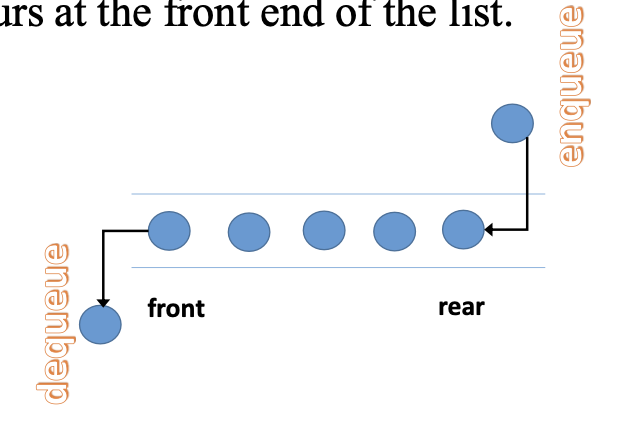
Simple Queue
- Insertion: rear
- Deletion : front
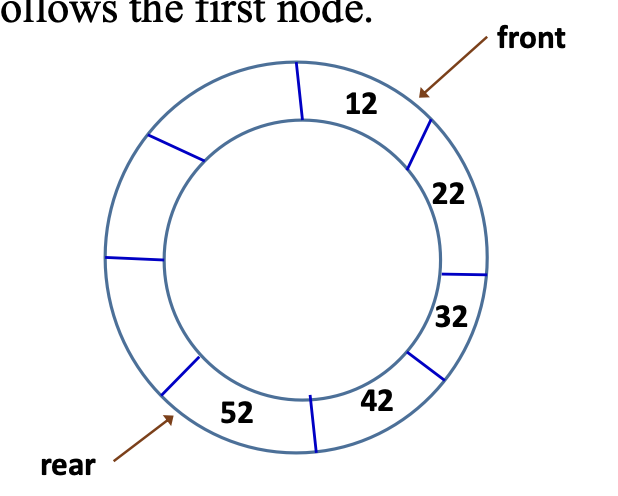
Circular Queue
- all nodes are treated as a circle
- last node follows the first node
Array Implementation
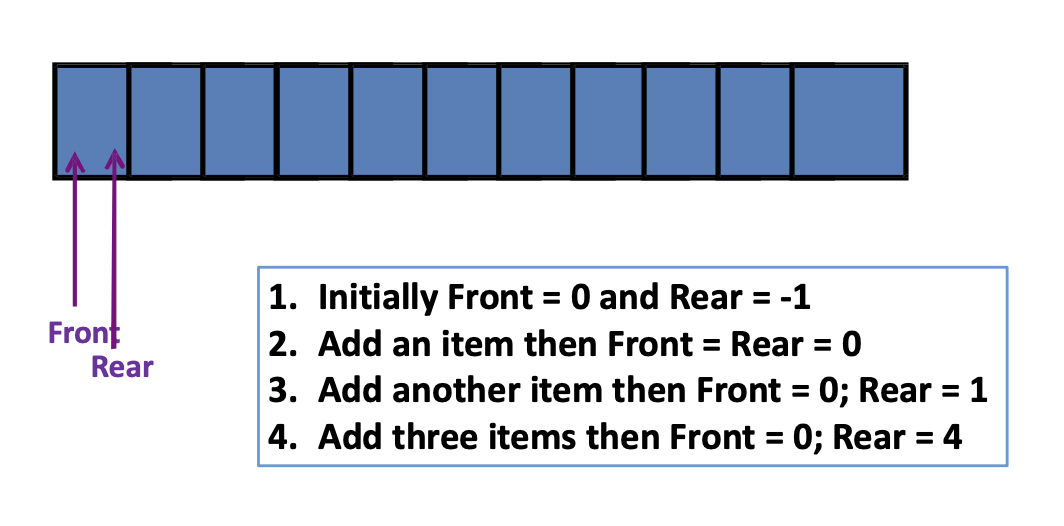
logical circularity of Queue
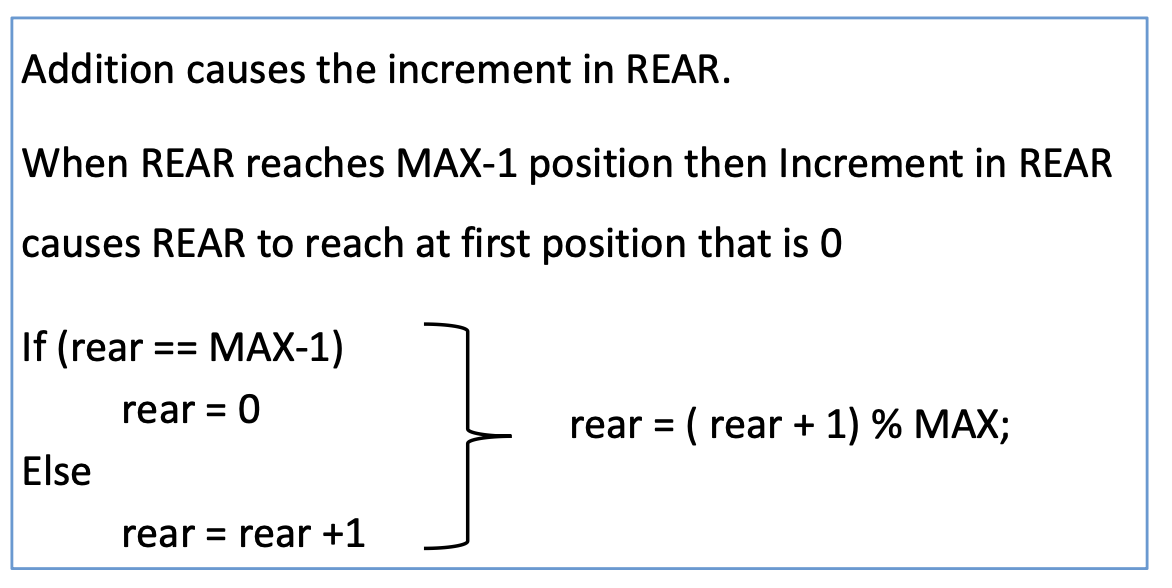
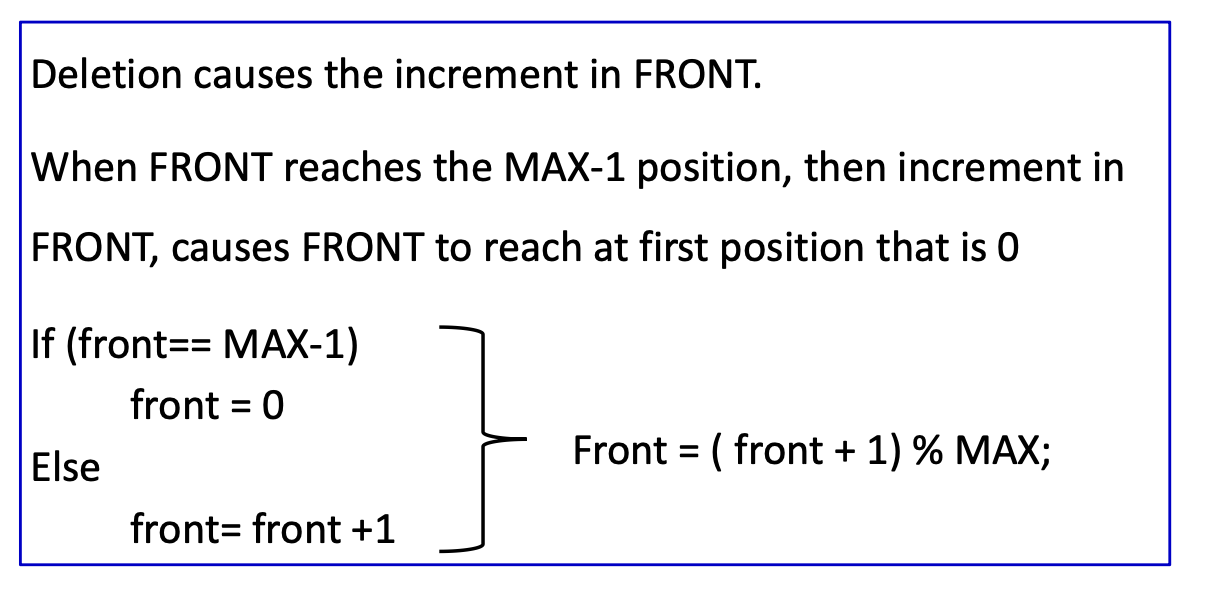
Drawbacks of Circular Queue
- Boundary case problem : difficult to distinguish full, empty queues
- necessary
before insertion, check overflow
before deletion, check underflow - Condition to check FULL Circular Queue
If (( front == MAX-1) || ( front ==0 && rear == MAX - 1)) - Condition to check EMPTY Circular Queue
if (( front == MAX-1) || ( front ==0 && rear == MAX - 1)) - To solve the drawback of circular Queue
: count variable to hold the current position
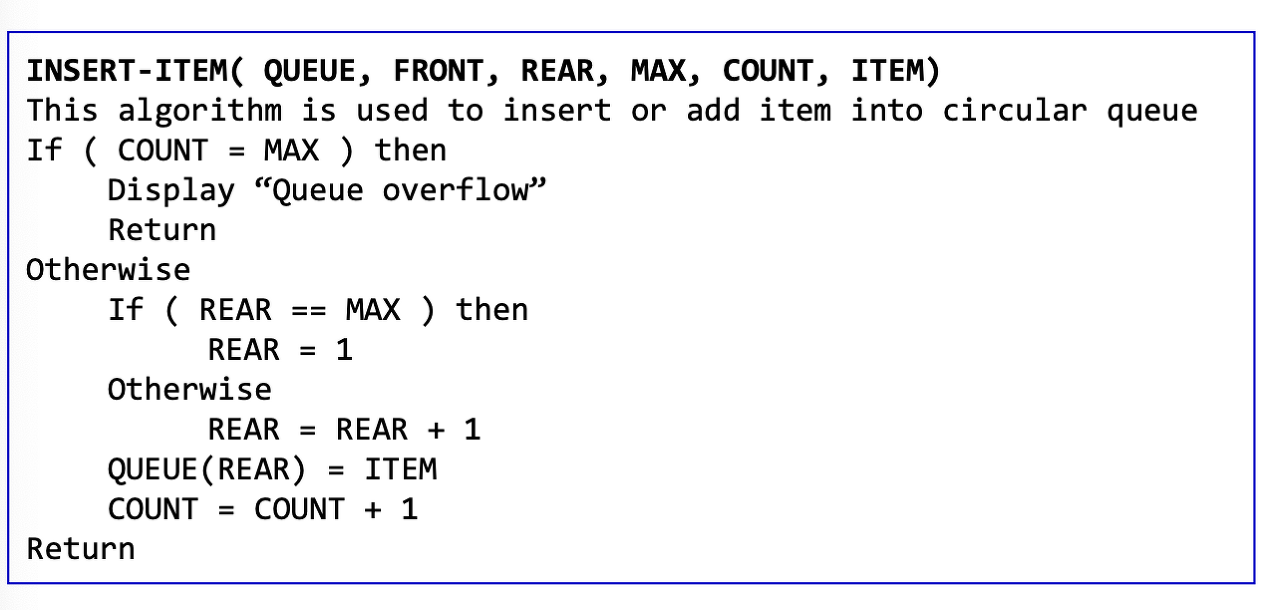
Circular Queue using count
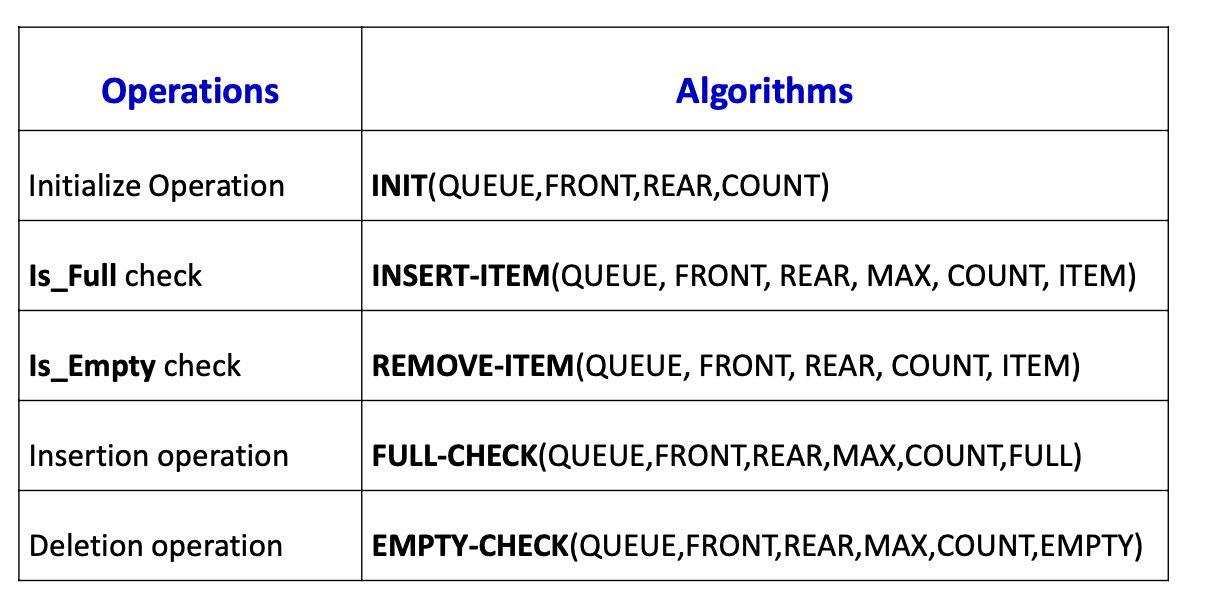

Insertion Operation
Deletion Operation

Priority Queue
- each item have some pre-defined priotiry.
- element can be inserted or removed from any position depending upon their priority

- FIFO x
- OPERATION
-InsertWithPriority : insert an item to the queue with associated priority
-GetNext : remove the element from the queue which has highest priority.
PopElement() or GetMaximum
-PeekAtNext(optional) : Get the item with highest prioity without removing it - every item has a priority associated with it
- high priority > low priority (dequeue)
- same priority -> order
-typical operations
insert(item, priority) : inserts an item with given priority
getHighestPriority() : returns the highest priority item
deleteHighestPriority() : Removes the highest priority item
Implementing Priority Queue
- insert() adding an item at end of array/ O(1) time
- getHighesPriority() Linearly search the highest priority item in array./ O(n) time
- deleteHighestPriority() First linearly search an item, them remove the item by moving all subsequent items one position back
- using linked list, time complextiy of all opearations remains same as array
- the advantage with linked list is deleteHighestPriority() can be more efficient as we don't have to move items
Some Applications of Queue
- modeling and analysis of computer networks
- cpu scheduling
- Graph algorithms like Dijkstra’s shortest path algorithm, Prim’s Minimum Spanning Tree.
- All queue applications where priority is involved
-Heap Sort
'Computer Science > Data Structure' 카테고리의 다른 글
| Linked List (0) | 2023.08.09 |
|---|---|
| Arrary (0) | 2023.08.09 |
| Stacks (0) | 2023.08.09 |
| Complexity Analysis (0) | 2023.08.09 |
| C programming (0) | 2023.08.09 |
'Computer Science/Data Structure' Related Articles
more


